8 months
length of the initiative
GrossiWeb proposal packet
3 areas
design workflows, customer communications, customer-facing interfaces
GrossiWeb proposal packet
Healthcare
software for medical practices
Wikipedia: Athenahealth
athenahealth
GrossiWeb helped athenahealth implement AI across design workflows, customer communications and customer-facing interfaces in an eight-month initiative.
8 months
length of the initiative
GrossiWeb proposal packet
3 areas
design workflows, customer communications, customer-facing interfaces
GrossiWeb proposal packet
Healthcare
software for medical practices
Wikipedia: Athenahealth
athenahealth is a privately held US healthcare technology company. It sells cloud software for ambulatory medical practices, including athenaOne, which covers electronic health records, practice management, billing and revenue cycle, and patient engagement. GrossiWeb helped athenahealth implement AI across design workflows, customer communications, and customer-facing interfaces in an eight-month initiative.
The approved scope was an AI implementation initiative for athenahealth that ran 8 months and covered 3 areas: design workflows, customer communications and customer-facing interfaces. Here is how we work in each area.
In design workflow work, we put AI to work where designers spend their time. We map the steps a design team follows, from research and concepts to review and handoff. Then we find the steps where AI saves effort and the steps where a designer's judgment must stay in charge. The goal is a workflow the team can repeat and trust.
In customer communications work, we decide what gets written, answered or routed with AI help, and what a person still handles. We define the tone, the topics and the limits first. We add review steps. We test messages against real situations before anything reaches a customer.
In customer-facing interface work, the AI shows up inside the product people use. That is a design problem as much as a technical one. Users need to know what the AI is doing, what it is not doing, and how to reach a person or correct it. We design those moments, build them and test them with the people who will use them.
Healthcare software has busy users and regulated data. Our method for that kind of product has four parts.
Our four-part method
Start from the people using it
Talk to the staff and customers who will touch the feature. Find the task that costs them the most time or causes the most friction.
Keep humans in the review loop
AI drafts and suggests. People review and decide. We build the review step into the workflow, not on top of it.
Measure before and after
Record how the task works today. Choose the measure first. Compare after launch, so the result is a number and not an opinion.
Respect regulated-data constraints
Decide what data AI may see and what it may not. Bring in compliance and security people early. Design inside those limits from day one.
If you build or sell software in a regulated field, AI work has to be careful. Our AI work with athenahealth, a healthcare software company, shapes the questions we ask first.
Start with the free consultation. Tell us where your team, your customers or your product could use AI. We will tell you where we would begin and what we would keep in human hands. See our AI & Automation and web design services.
Services behind this work: AI & Automation, Digital product design.
Published .
Dolce Glow
E-commerce design
GrossiWeb worked on e-commerce design for Dolce Glow, a self-tanning brand sold at Sephora, Ulta and Nordstrom.
Read the project profile →eBay
Onboarding design
GrossiWeb designed onboarding for eBay Top Star, a buyer loyalty program for a defined consumer audience.
Read the project profile →Johnson & Johnson Innovation Team
AI implementation and digital product design
GrossiWeb supported AI implementation and digital product design for the Johnson & Johnson Innovation Team, with a focus on consumer-facing apps.
Read the project profile →Student housing operator
Email marketing execution and review
GrossiWeb ran email execution and click-performance review for a student housing operator and explored ideas for testing different email formats.
Read the project profile →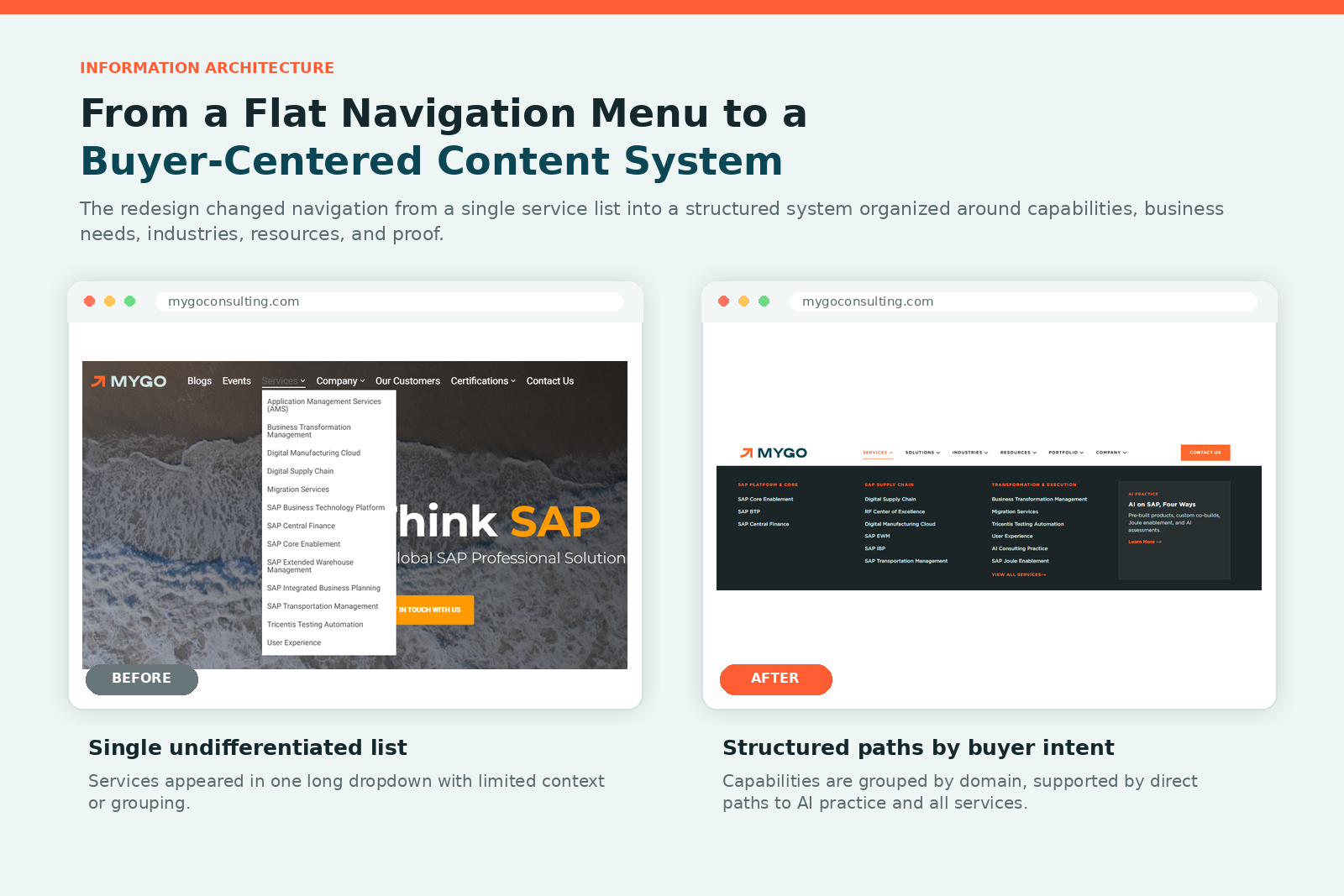
MYGO Consulting
GrossiWeb rebuilt MYGO Consulting's HubSpot site as a 213-page Next.js platform. Google Search clicks went from 34 to 957 in the first period after launch.

Recycling Quotes
GrossiWeb rebuilt a B2B recycling website. In the first month after launch, Google Search clicks rose from 13 to 24 and impressions from 3,010 to 7,510.